Iran war aftermath- material cost experiences meteoric rise affects business
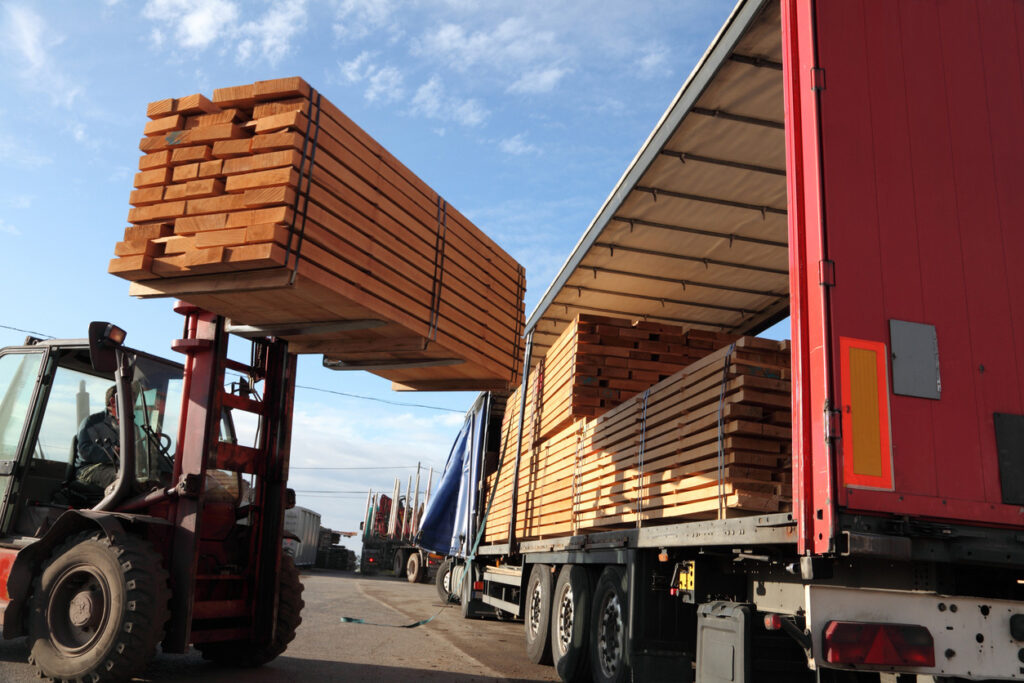
Forklift loading stacks of beech boards on a truck. Please see similar pictures :
Impact of Iran war on woodworking and manufacturing industry has been havoc. After the supplychain issue and inflation effect the Iran war situation has impacted heavily on the woodworking market. A recent news report from Wall Street Journal mentions that across the spectrum of building products, including lumber, higher costs of materials “are boosting construction costs and busting renovation budgets.”
“Taken together,” the Journal added further that, “these rising input costs are adding to an affordability problem that is pushing homeownership beyond reach for more Americans. In addition to boosting the base cost of building and remodelling homes, rising materials prices are contributing to the inflation that has pushed up financing rates.”
The analysis quoted a number of sources in the building trade who are seeing what current events are doing to costs.
“Input prices have now risen more during the first four months of 2026 than over the prior three years,” Anirban Basu, chief economist at Associated Builders and Contractors, told the WSJ. “These cost pressures will likely weigh on construction activity over the coming months.”
The National Association of Home Builders told the Journal that 70 percent of respondents in its April builder-confidence survey reported difficulty pricing homes given uncertainty about material costs.
Lumber has especially been hard hit. Random Lengths’ Framing Lumber Composite Price, the trade publication’s gauge of on-the-spot prices, is up more than 30 percent from the December lows, the Journal wrote. “Sawmill owners and forest-products analysts say lower production and few imports have tightened the lumber market to the point that an uptick in demand is likely to send prices shooting higher.”
Tariffs continue to impact costs, according to the report. “Lumber buyers anticipate some relief later this year when the duties on Canadian imports are expected to drop to an average of roughly 25 percent, from about 35 percent. But that adjustment will come too late for this building season.”
Some builders are taking a wait-and-see attitude for the time being, PulteGroup CEO Ryan Marshall told the Journal. “If it continues (the war in the Middle East), there will be real cost increases. But we’re not going to overreact to the whipsawing of markets up, markets down based on what’s happening on a day-to-day basis from the conflict.”
Source: IWF
About The Author