Indian Woodworking Industry: transforming furniture manufacturing through technology and innovation
India’s woodworking industry is evolving, with advanced machinery, engineered wood and modern furniture manufacturing shaping its future.
India’s Woodworking Industry: the changing landscape of furniture manufacturing
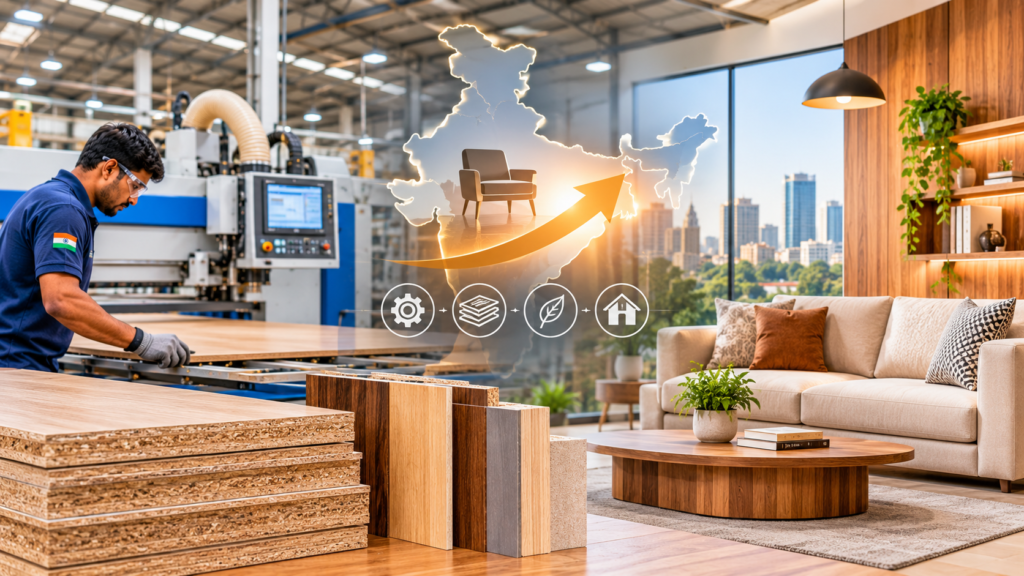
From traditional carpentry to technology-driven production, India’s woodworking and furniture manufacturing industry is undergoing a significant transformation, driven by rising consumer demand, engineered wood, automation and changing interior design preferences.
India’s woodworking and furniture manufacturing industry is entering a new phase of development. Traditionally characterised by small workshops, skilled carpenters and largely conventional production methods, the sector is gradually evolving into a more organised, technology-driven manufacturing ecosystem.
Rising urbanisation, changing lifestyles, increased demand for modular furniture and growing investments in manufacturing are reshaping the industry. At the same time, advancements in woodworking machinery, engineered wood products, digital technologies and surface materials are creating new opportunities for manufacturers across the country.
The transformation is not limited to furniture production. It extends across the entire value chain, including wood-based panels, decorative surfaces, hardware, adhesives, coatings, machinery and interior solutions.
A growing market with new opportunities
India’s expanding housing and real estate sectors are providing an important foundation for the growth of furniture manufacturing. Increasing demand for residential interiors, modular kitchens, wardrobes, office furniture and customised storage solutions is changing the way furniture is designed and produced.
According to industry estimates cited by the INDIAWOOD 2027 organisers, India’s furniture market was valued at approximately ₹1,925 billion in FY2025 and is projected to reach ₹3,470 billion by FY2030.
This expanding market presents opportunities for both established manufacturers and emerging businesses. Consumers are increasingly looking beyond conventional furniture towards products that combine functionality, aesthetics, durability and efficient use of space.
The growing popularity of modular furniture is particularly significant. Standardised components, engineered wood panels and precision manufacturing systems are making it possible to produce customised furniture at greater scale and with improved consistency.
For manufacturers, this shift is creating demand for advanced machinery, better production planning and more integrated manufacturing processes.
Engineered wood reshapes the materials landscape
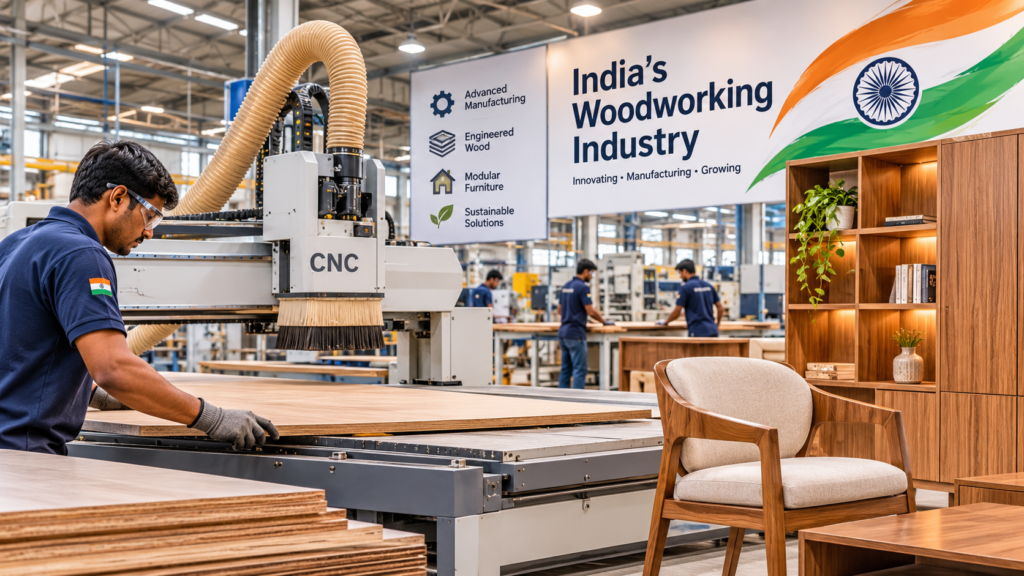
One of the most important developments influencing furniture manufacturing in India is the growing adoption of engineered wood products.
Medium Density Fibreboard (MDF), particleboard and other wood-based panels are increasingly being used in furniture, cabinetry, modular kitchens and interior applications. Their uniform properties, surface consistency and suitability for machine processing make them attractive materials for contemporary furniture production.
According to an IDBI Capital wood panel sector update published in May 2026, India’s wood panel industry reached approximately ₹550 billion in FY2024, registering around 10% compound annual growth between FY2018 and FY2024. The MDF segment recorded particularly strong growth of approximately 25% annually during the same period.
The shift towards engineered wood is also influencing manufacturing practices. CNC machining, automated cutting, edge banding and pre-laminated panel processing are enabling manufacturers to achieve greater precision while reducing material wastage.
However, plywood continues to maintain an important position in the Indian market, particularly in applications requiring specific structural properties and established consumer familiarity. The future materials landscape is therefore likely to involve a combination of plywood, MDF, particleboard and other engineered solutions, depending on the application and price segment.
Technology and automation transform production
Technology adoption is becoming increasingly important as Indian furniture manufacturers look to improve productivity, maintain quality and compete in a more demanding marketplace.
Traditional woodworking operations are gradually being supplemented by computer-controlled machinery and integrated production systems.
Some of the key technologies gaining importance include:
- CNC nesting machines: Enabling precise cutting of panels, optimised material utilisation and more efficient production of furniture components.
- Automatic edge banding machines: Improving finishing quality, consistency and production speed.
- CNC drilling and machining centres: Supporting precision manufacturing of furniture components and hardware connections.
- Automated sanding and finishing systems: Delivering more consistent surface quality across production batches.
- Digital production software: Helping manufacturers manage designs, optimise cutting patterns, monitor production and improve workflow efficiency.
The growing importance of these technologies was evident at INDIAWOOD 2026, held in Bengaluru in February and March. According to the event organiser’s post-show announcement, the exhibition brought together more than 1,000 brands from over 50 countries and attracted more than 85,000 visitors.
Automation, digital integration, smart factory solutions and advanced CNC machinery featured prominently, reflecting the industry’s increasing interest in technology-led manufacturing.
The challenge ahead will be making these technologies accessible to manufacturers of different sizes, particularly smaller businesses that may face financial and technical barriers to automation.
The evolution of modular furniture manufacturing
Changing consumer preferences are having a direct impact on furniture production.
Urban homes increasingly require furniture that makes efficient use of available space. Modular kitchens, wardrobes, sliding-door systems, compact storage solutions and multifunctional furniture are gaining importance in residential interiors.
This is encouraging manufacturers to move towards standardised components, precision-engineered panels and flexible production systems.
The growth of organised furniture brands and online furniture retail is also influencing product development. Consumers increasingly expect a wider choice of designs, finishes, sizes and configurations, while manufacturers must balance customisation with production efficiency.
Hardware and furniture fittings are another important part of this transformation. Advanced hinges, drawer systems, sliding mechanisms and concealed fittings are becoming integral to modern furniture design.
For the woodworking industry, this creates opportunities for collaboration between panel manufacturers, machinery suppliers, hardware companies and furniture producers.
Surface innovation and changing design preferences
Materials and surface finishes are playing an increasingly important role in defining the appearance and value of contemporary furniture.
Decorative laminates, veneers, textured surfaces, high-gloss finishes and digitally developed decorative materials are expanding design possibilities for manufacturers and interior designers.
Consumers are showing growing interest in natural wood aesthetics, sophisticated textures, minimalist finishes and customised interior solutions.
At the same time, manufacturers are exploring materials that combine visual appeal with durability, ease of maintenance and cost efficiency.
The Indian decorative surface industry is particularly well positioned to benefit from these changing preferences, with domestic manufacturers serving both the growing local market and international customers.
Sustainability becomes an industry priority
Sustainability is emerging as another important consideration across the woodworking and furniture manufacturing value chain.
Responsible sourcing of timber, efficient utilisation of raw materials, reduced production waste and lower-emission products are receiving greater attention from manufacturers and consumers.
Engineered wood products can also contribute to more efficient material utilisation when manufactured using responsibly sourced raw materials and appropriate production practices.
Manufacturers are increasingly exploring low-emission adhesives, environmentally conscious coatings, recycled materials and alternative resources such as bamboo and reclaimed timber.
However, sustainability will require more than introducing individual eco-friendly products. It will involve improvements across sourcing, manufacturing, energy consumption, product durability and waste management.
For Indian companies seeking to strengthen their presence in international markets, compliance with relevant environmental and quality standards will become increasingly important.
Strengthening India’s position in global furniture manufacturing
India’s large domestic market, manufacturing capabilities and established woodworking ecosystem provide a strong foundation for future growth.
The Federation of Indian Chambers of Commerce and Industry (FICCI) identifies furniture manufacturing as a priority area for improving the country’s industrial competitiveness. Its furniture sector initiative highlights the importance of manufacturing scale, investment, raw material availability, logistics, skills development and international market linkages.
However, several challenges remain.
A significant portion of the furniture manufacturing sector continues to operate through small and fragmented businesses. Access to modern machinery, skilled operators, organised supply chains and affordable finance remains uneven.
Manufacturers also need to address quality consistency, production costs, delivery timelines and the ability to meet international standards.
Strengthening domestic manufacturing capabilities and developing integrated furniture production clusters could help address some of these challenges.
Industry platforms such as INDIAWOOD also play an important role by connecting manufacturers with global technology providers, material suppliers and industry experts.
The road ahead: a more competitive and technology-driven industry
The future of India’s woodworking industry will be shaped by its ability to combine traditional manufacturing strengths with modern production technologies.
The transition towards engineered wood, modular furniture, automation and innovative surface materials is creating a more sophisticated manufacturing environment.
For machinery manufacturers, the expanding market presents opportunities to introduce advanced and cost-effective production solutions. For panel and surface producers, changing furniture preferences are opening new application areas. For furniture manufacturers, investment in technology, design capabilities and workforce development will be essential to achieving greater competitiveness.
India’s woodworking industry is no longer defined solely by its traditional craftsmanship. It is increasingly becoming part of a broader manufacturing ecosystem where technology, materials, design and production efficiency work together.
As domestic demand continues to evolve and global manufacturing opportunities expand, the industry’s next phase will depend on how effectively Indian businesses embrace innovation, improve manufacturing capabilities and build products that meet changing market expectations.
About The Author