LIGNA 2025: Highlight innovations in Sustainable Forestry
LIGNA 2025 explores new paths in Forestry towards greater resource efficiency. The forestry industry leads LIGNA 2025 visitors on new paths toward greater resource efficiency.
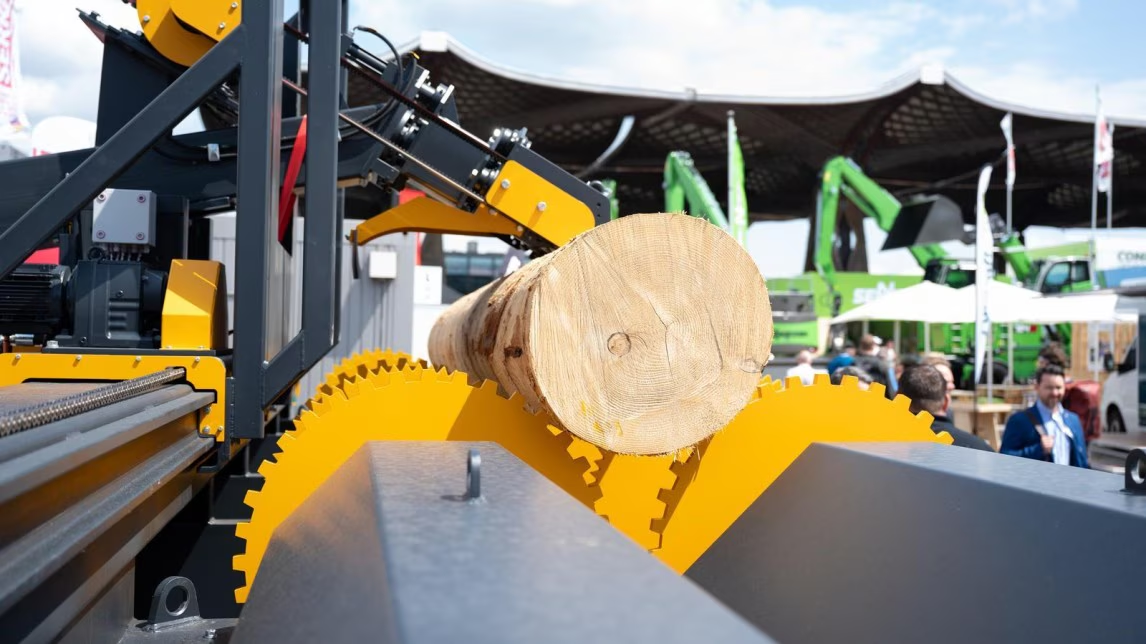
LIGNA 2025 explore new paths in Forestry towards greater resource efficiency. The forestry industry led LIGNA 2025 visitors on new paths toward greater resource efficiency. As it celebrated its 50th anniversary, the forestry sector put major highlights on showcasing advancements in innovation, safety, and sustainability.
The forestry industry has taken the centre stage at LIGNA 2025. There was a strong focus on climate resilience, resource efficiency, and active forest management. Given the recent forest damage and the increasing demand for wood, the fair showcased modern tools and methods. These innovations can build resilient forests. They can also secure a sustainable supply of this vital raw material.
Role of wood supply could never be ignored in the global woodworking and wood processing industry. And this LIGNA in Hanover from May 26 to 30 witnessed diverse aspects of optimized timber harvesting methods. Modern large-scale forestry equipment, mobile sawmills, smart logistics, and safe transport were highlighted. These are technical pioneers for the material and energy use of wood. Visitors also chanced to explore critical efforts to preserve forests as a sustainable source of raw materials. These efforts aim to benefit future generations and prepare them for future challenges. As a platform for the digitalization of process chains in the forestry and timber industry, LIGNA 2025 thus opened access to new growth markets.

Key themes and highlights within the forestry sector at LIGNA 2025 include:
Innovation:
- Smart Forestry: This includes cutting-edge machinery, smart logistics, and digital integration for optimizing timber harvesting methods, mobile sawmills, and transport.
- Traceability Systems: The “Follow the Timber” special show demonstrated the digital traceability systems that track raw timber “from the tree to the factory,” ensuring legal verification and optimizing business processes.
- Battery-Powered Tools: Demonstrations showcased modern stand establishment methods using battery-powered tools, which reduce emissions and improve efficiency in tasks like brush clearing and tree selection.
- New Wood Species and Products: Research and innovation were presented on the use of underutilized species like red oak, birch, and sweet chestnut in climate-adaptive design, as well as innovations in hardwood and hybrid timber systems for construction.
Safety:
- Worker Safety Innovations: Exhibitors displayed new safety technologies to minimize risks for forestry workers, including remote-controlled wedges for safer tree felling and cooling clothing for open-area work to combat issues like sun exposure and skin cancer.
- Training and Education: Organizations like the Forestry Training Center (NFBz) and the Social Insurance for Agriculture, Forestry and Horticulture (SVLFG) emphasized on the importance of education and training to equip future forestry professionals with the skills for safe and sustainable practices.
- Assistance Systems: Machine manufacturers like Liebherr displayed special machines with advanced assistance systems, such as active rear-view person detection, to enhance safety in timber handling operations.

Sustainability:
- Climate-Adapted Forests: A central focus is on developing forest stands that are better adapted to local conditions and the changing climate, ensuring a future supply of renewable and climate-friendly wood.
- Resource Efficiency: LIGNA 2025 highlighted strategies for preserving forests as a renewable resource and promoting resource-saving construction methods, such as the use of innovative truss construction to reduce timber consumption.
- Circular Economy: Discussions also explored strategies for circular wood usage and a forest-based bioeconomy, including methods for reusing and recycling timber and steel components after their lifespan.
- Active Forest Management: The importance of active forest management in positively supporting climate change adaptations and creating added value for society were a key discussion point.
- Digitalization for Sustainability: The digitalization of process chains in the forestry and timber industry was presented to achieve greater resource efficiency and open access to new growth markets.
LIGNA 2025 serves as a crucial platform for industry professionals, policymakers, researchers, and technology leaders to converge and advance the future of forestry, ensuring its role as a pillar for a sustainable economy and climate policy.
Source: LIGNA
About The Author